


Classification of steel varieties
18 Aug,2023
1. Steel for railways: refers to the steel mainly used for production and construction by the railway sector. It mainly includes light rails, heavy rails, industrial rails, crane rails, conductive steel track switch rails and other rails, rail accessories such as fasteners, wheels, tires, axles and axle blanks, etc. Among them, the rails greater than 30 kg/m are heavy rails, and the rails not greater than 30 kg/m are light rails.
2. Long products
Sectional steel: Sectional steel refers to steel with more complex shapes such as letters H, 1, U, L, Z, T, etc. According to the height of the section, it is divided into large section steel and medium and small section steel. Profiles are widely used in various sectors of the national economy. For example, I-beams are mainly used in building components, bridge manufacturing, and shipbuilding; channel steel is mainly used in building structures and vehicle manufacturing; window frame steel is mainly used in industrial and civil buildings. Among them, large section steel refers to section steel with a height of not less than 80mm, and small and medium-sized section steel refers to section steel with a height of less than 80mm.
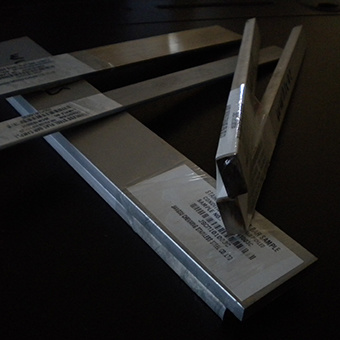
Bars: Bars refer to steel products with simple cross-sections such as round, square, rectangular (including flat), hexagonal, and octagonal, and are usually delivered in straight strips, excluding concrete steel.
Rebar: Rebar refers to the steel used for reinforced concrete and prestressed concrete. It is circular in cross section, sometimes square with rounded corners. Usually delivered in straight strips, but excluding steel from wire rod mills. According to the processing technology, it is divided into: hot-rolled steel bar, cold-rolled (drawn) steel bar and other steel bars; according to the variety, it is divided into: smooth round steel bar, ribbed steel bar and twisted steel bar. According to the strength, it is divided into: first-class (235MPa), second-class (335MPa), third-class (400Mpa), fourth-class (590Mpa) and fifth-class (1350Mpa) steel bars.
3. Wire
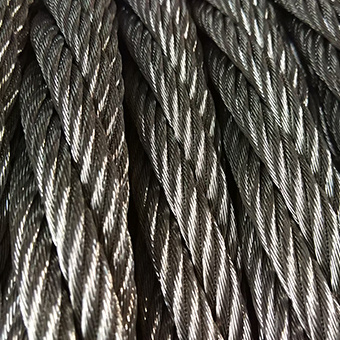
Wire rod refers to the steel that is rolled into a coil and delivered after being hot-rolled by a wire rod mill, also known as wire rod. Wires with a carbon content of more than 0.6% are commonly called hard wires, and are generally used as raw materials for steel cords, steel fibers, and steel strands, and wires with a carbon content of less than 0.6% are commonly called soft wires. Wire rods are mainly used for construction and drawing steel wire and its products. When hot-rolled wire is used directly, it is mostly used in the construction industry as a smooth round steel bar.
According to the purpose, the wire rod can be divided into: wire rod for wire drawing, wire rod for mesh, wire rod for construction and other general purposes; according to rolling speed and coil weight, it can be divided into: ordinary wire, high wire and quasi-high wire: high wire rolling speed At 100-120m/s, the rolling speed of quasi-high wire is 60-90m/s; the coil weight of ordinary wire is generally 600-800 kg/coil, and the weight of high-grade wire is generally 1.5-2 tons/coil
Old grades: Common grades are generally divided into three types: Q195, Q215, and Q235. Among them, there are only two grades of Q215 and Q235 for construction steel wire rods; for example: Q235 (Q refers to the yield strength of steel, and 235 refers to the yield strength of not less than 235Mpa) . New grades: HPB195, HPB215, HPB235, HPB300, among which the construction steel plates are HPB215, HPB235, HPB300. (H: means hot rolling, P: means light round, B: steel bar, 235: means the yield point is 235Mpa
4. Flat material
Extra-heavy plate: refers to a steel plate with a thickness of not less than 50 mm, which is generally produced by a reversible hot-rolled extra-heavy plate mill, and is mainly used in boilers, shipbuilding, aviation, military industry and national defense, building bridges and containers, etc.
Thick steel plate: refers to a steel plate with a thickness of not less than 20 mm and less than 50 mm, generally produced by a reversible hot-rolled plate mill, and mainly used in boilers, shipbuilding, aviation, military defense, construction, bridges and containers.
Middle plate: Middle plate refers to a steel plate with a thickness not less than 3 mm and less than 20 mm. It can be the cut product of hot-rolled strip steel produced by reversing hot-rolled plate mill or continuous wide-band steel hot-rolling mill, and its thin-gauge products can also be processed by cold-rolling mill. Medium plates are mainly used in boilers, shipbuilding, train carriages, containers, military and national defense, construction, bridges and containers, etc.
Thin plate refers to a single steel plate with a thickness of less than 3mm. Sheets are divided into hot-rolled sheets and cold-rolled sheets according to the rolling process, including sheets produced by single-sheet rolling and sheets cut from wide steel strips into individual sheets. Mainly used in automobiles, shipbuilding, machinery, enamel, containers, construction, home appliances, furniture, agricultural machinery and containers, etc.
Hot-rolled thin plates are usually obtained by shearing hot-rolled wide-band steels produced by continuous wide-band steel rolling mills, steel-steel rolling mills, and thin-slab continuous casting and rolling equipment. The hot-rolled sheet production process of single sheet production or stack rolling production belongs to the elimination process.
Cold-rolled thin plates are usually single-rolled by reversible cold-rolling mills, and can also be obtained by shearing cold-rolled wide-band steel produced by reversible cold-rolling mills or continuous wide-band steel cold-rolling mills.
Medium-thick and wide steel strip: refers to the steel strip with a thickness of not less than 3 mm and a width of not less than 600 mm, which is produced by continuous wide-band steel hot rolling mills or steel coil mills and delivered in coils.
Hot-rolled thin and wide steel strip: refers to the steel strip with a thickness of not less than 3 mm and a width of not less than 600 mm, which is delivered in coils by continuous wide-band steel hot-rolling mills, steel-steel rolling mills, or thin-slab continuous rolling equipment.
Cold-rolled thin and wide steel strip refers to a steel strip with a thickness of not less than 3mm and a width of not less than 600mm, usually produced by continuous wide-band steel cold rolling mills or reversing cold rolling mills, and delivered in coils.
Hot-rolled narrow steel strip refers to a steel strip with a width of not less than 600 mm, usually produced by hot-rolled strip mills or other equipment or obtained by slitting hot-rolled wide steel strips, and usually delivered in coils.
Cold-rolled narrow steel strip refers to a steel strip with a width of not less than 600 mm, which is usually produced by cold-rolled strip mills or other equipment or obtained by slitting cold-rolled wide steel strips, and is usually delivered in coils.
Coated plate (strip): refers to the steel plated with a layer of metal on the surface of the base plate (strip). Galvanized sheet refers to a steel sheet coated with a layer of zinc on the surface. Galvanized sheets are divided into hot-dip galvanized sheets and electro-galvanized sheets according to the production process. The thickness of the zinc layer of the hot-dip galvanized sheet is relatively thick, and it is used for parts with strong corrosion resistance. The thickness of the zinc layer of the electro-galvanized sheet is thin and uniform, and it is mostly used for painting or interior products.
Tinplate, commonly known as tinplate, refers to a steel plate coated with a thin layer of metallic tin on the surface. It has good corrosion resistance, certain strength and hardness, good formability and easy welding. The tin layer is non-toxic and tasteless, can prevent iron from dissolving into the packaged objects, and has a bright surface. Printing pictures can beautify the goods. It is mainly used in the food can industry, and secondly used in chemical paints, oils, medicines and other packaging materials. Tin plate is divided into hot-dip tin plate and electro-tin plate according to the production process.
Refers to the use of galvanized sheets, aluminum sheets, galvanized aluminum alloy sheets, cold-rolled sheets, etc. Or a product obtained by applying a layer of plastic film. Because it can be made into different colors or extruded patterns, it is also called color steel plate. This steel plate is widely used in construction, transportation, containers, light industry, electrical appliances, furniture and instruments and other industries.
Electrical steel sheet, also known as silicon steel sheet, refers to a silicon-iron soft magnetic alloy with extremely low carbon content (after annealing, the carbon content is below 0.005%). The general silicon content is 0.5%-4.5%. Adding silicon to iron can increase its resistivity and increase its magnetic permeability. Electrical steel plates are mainly used to manufacture iron cores for various transformers, generators and generators.
Electrical steel sheets are divided into two categories, namely, oriented electrical steel sheets and non-oriented electrical steel sheets. Oriented electrical steel sheet refers to the electrical steel sheet with a certain grain orientation. The magnetic properties of this kind of electrical steel plate are obviously better than those of the transverse direction. It is mainly used for transformers and is produced by cold rolling process. Non-oriented electrical steel sheet refers to electrical steel sheet with random grain orientation. The rolling direction of this kind of electrical steel plate is roughly the same as that of the transverse magnetic field, and it is mainly used for motors.
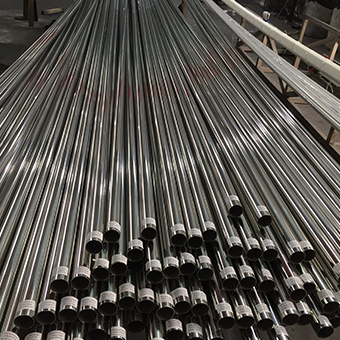
5. Pipe material: Steel pipe refers to a steel material that is open at both ends and has a hollow section, and the ratio of its length to the surrounding area is large. According to the processing technology, it can be divided into seamless steel pipe and welded steel pipe. The production methods mainly include hot rolling, cold rolling, extrusion cold drawing, forging, welding and so on. Its specifications are expressed in terms of external dimensions (plus outer diameter or side length) and wall thickness. It has a wide range of sizes and is extremely versatile.
Seamless steel pipe: refers to a steel pipe made of a whole piece of metal without seams on the surface
Welded steel pipe: refers to a steel pipe with seams on the surface that is welded after bending and deforming a steel strip or steel plate into a desired shape such as a circle or a square.
Previous page

GTINOX has focused on top quality stainless steel products for over 20 years in China.
ALL PRODUCTS
Contact Us

Av.Lianfu,Wangcheng town,Xinjian District,Nanchang City 330100,Jiangxi Province.China


Search for the product you want to know


SAF Coolest v1.3 设置面板 JMUSX-ZDTN-SFAFE-ZDF
无数据提示
Sorry, there is currently no content in the current column!
You can view other columns or return to Home